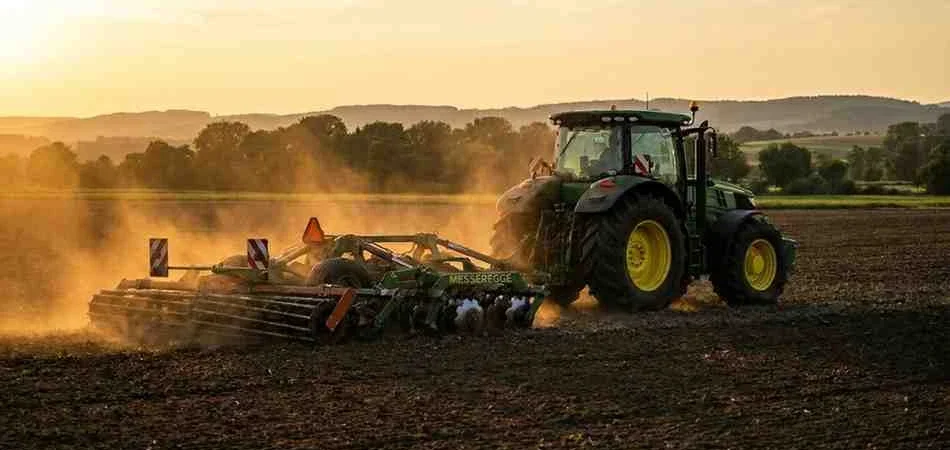
In modern farming, the difference between a good harvest and a great one often begins before a single seed hits the ground. Soil preparation — the art and science of creating the ideal seedbed — is the foundation upon which every crop yield is built. And when it comes to efficient, high-quality soil cultivation, the messeregge has earned its place as one of the most effective implements a farmer can attach to their tractor.
Whether you are working with compacted clay soils, breaking up large clods after a wet season, or preparing a fine, level seedbed ahead of a precision drilling operation, a messeregge (knife harrow) combined with a Profiwalze roller system delivers results that are difficult to match with conventional tillage equipment alone.
This comprehensive guide covers everything you need to know: what a messeregge is and how it works, the key benefits of front-mounted systems, how Profiwalze combinations maximize performance, what features to look for when buying, and answers to the most common questions asked by farmers and agricultural equipment buyers. Let us get into it.
What Is a Messeregge?
The term messeregge comes from German agricultural engineering — combining Messer (knife) and Egge (harrow). In English, it is commonly referred to as a knife harrow or blade harrow. The implement consists of a rigid or semi-rigid frame fitted with a series of angled knife-like blades or tines that cut, shatter, and level the topsoil as the tractor moves forward.
Unlike conventional disc harrows or rotary tillers, the messeregge works with a passive, mechanical action. There are no driven moving parts — the cutting blades engage the soil purely through forward motion, making it a low-maintenance, fuel-efficient tool for seedbed preparation and soil leveling.
Key Components of a Messeregge
- Knife tines/blades: Hardened steel blades arranged in rows that penetrate and fracture compacted soil clods.
- Main frame: Heavy-duty welded steel frame, typically available in working widths from 1500 mm to 3000 mm, with the Messeregge 2600 mm being a widely popular configuration.
- Dreipunktaufnahme (three-point linkage): Standard Category II or III three-point hitch connection, ensuring compatibility with a wide range of modern tractors.
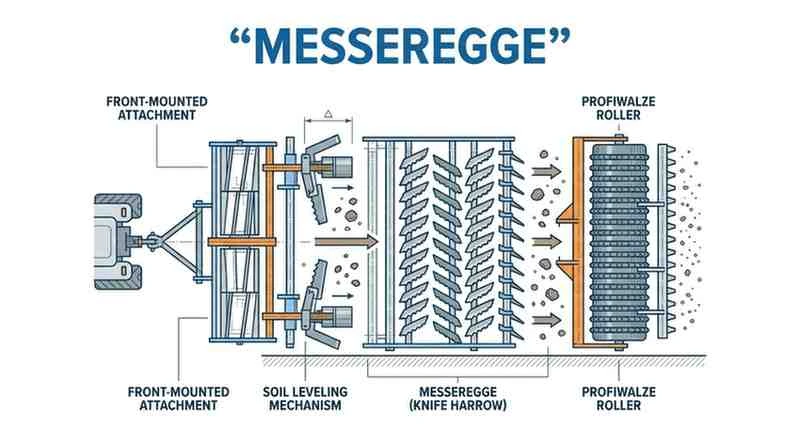
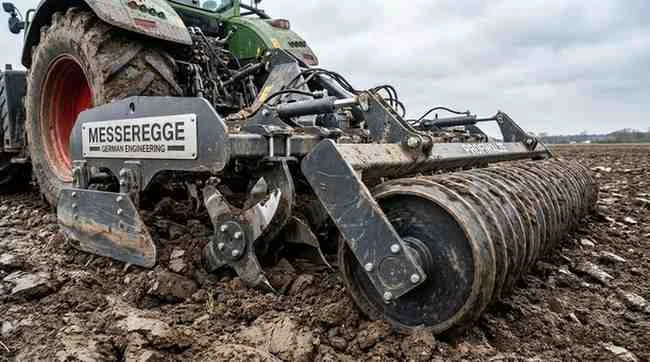
- Profiwalze attachment: Many modern messeregge systems include a rear or front-mounted heavy soil roller (Profiwalze) that consolidates and levels the soil after the blades have worked it.
- Depth adjustment system: Allows operators to set working depth depending on soil conditions and preparation requirements.
How a Knife Harrow Works
As the tractor moves across a field, the knife tines penetrate the top 5–15 cm of soil. The angled blade geometry causes clods to shatter and crumble rather than simply being pushed aside. Simultaneously, the harrow frame levels surface irregularities — burying crop residues, breaking up compaction, and creating a uniformly fine tilth. When paired with a Profiwalze roller, the loose broken soil is then pressed into firm, even contact, creating the perfect environment for seed germination.
Benefits of Using a Messeregge in Modern Soil Cultivation
Investing in a quality messeregge delivers measurable benefits across nearly every stage of the growing season. Here is why so many German and European farmers have made it a cornerstone of their Bodenbearbeitungsgeräte (soil cultivation equipment) lineup:
1. Superior Seedbed Preparation (Saatbettbereitung)
A finely prepared, uniform seedbed is the single most important factor in achieving even crop emergence and maximizing yield potential. The messeregge’s knife action produces a consistently fine, crumbly tilth in a single pass — reducing the number of tillage operations required and saving both time and fuel.
2. Effective Clod Breaking and Soil Leveling
After ploughing or subsoiling, fields are often left with large clods that need to be broken down before drilling. The messeregge excels at this task. The hardened knife tines shatter clods efficiently without over-working the soil, preserving soil structure and reducing the risk of compaction in the lower horizons.
3. Improved Crop Emergence
Uniform seed-to-soil contact — achieved by the combination of knife action and Profiwalze consolidation — dramatically improves germination rates. Seeds placed in a well-prepared bed have consistent access to moisture and nutrients from the first days after drilling, leading to more even establishment and ultimately higher yields.
4. Reduced Fuel and Labor Costs
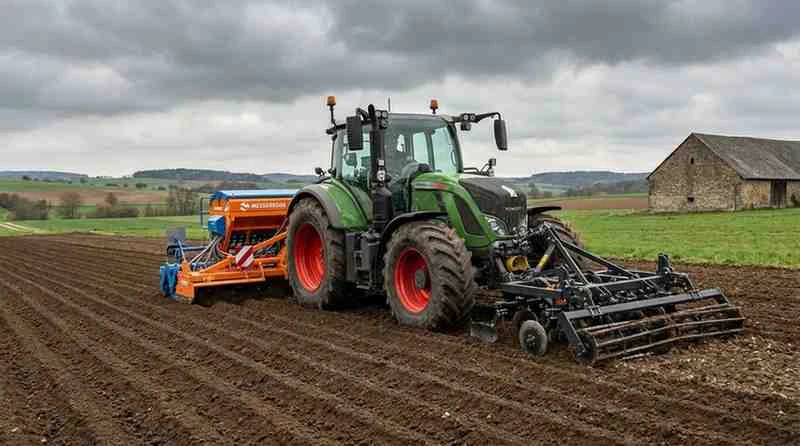
Because the messeregge prepares the seedbed in fewer passes than multi-implement systems, fuel consumption is significantly reduced. Front-mounted configurations (Frontanbau Messeregge) allow simultaneous preparation in both front and rear positions, completing two tillage operations in a single tractor pass — a major efficiency gain on large farm operations.
5. Low Maintenance and High Reliability
With no driven components, gearboxes, or complex hydraulic systems, the messeregge has one of the lowest maintenance requirements of any soil cultivation implement. Replacement of worn knife tines is straightforward, and the robust welded frames are built to last decades with proper care.
Messeregge and Profiwalze: Why the Combination Matters
One of the most significant advances in seedbed preparation technology has been the integration of the Profiwalze — a heavy-duty profiled soil roller — with the messeregge frame. Manufacturers like Fliegl have pioneered Fliegl Messeregge systems that incorporate this combination to outstanding effect.
How the Profiwalze Works
The Profiwalze consists of a heavy steel roller fitted with profiled rings or bars. As it follows the knife tines, it performs three simultaneous actions: it consolidates the freshly worked soil, presses stones and clods into the ground (reducing surface stone content), and creates a slightly ridged surface texture that improves moisture retention and reduces wind erosion on light soils. The Profiwalze 2600 mm configuration matches the Messeregge 2600 mm working width precisely, ensuring complete coverage.
Front-Mounted vs Rear-Mounted Systems
| Configuration | Advantages | Best For |
| Front-mounted (Frontanbau) | Simultaneous front/rear operation; improved tractor weight distribution | Large-scale, multi-pass-in-one operations |
| Rear-mounted | Simpler setup; better visibility; suitable for smaller tractors | Smaller holdings; standalone seedbed pass |
| Front + Rear combined | Maximum efficiency; complete cultivation in one pass | High-output commercial operations |
Key Features to Look for When Buying a Messeregge
Not all messeregge systems are created equal. Here are the critical features and specifications to evaluate before making a purchase:
Working Width
Working width is the primary sizing factor. Common widths include 1500 mm, 2000 mm, 2600 mm, and 3000 mm. The Messeregge 2600 mm is popular for mid-to-large farm operations as it balances field coverage with manageability on headlands. Wider machines offer greater output but require more powerful tractors and wider trailers for transport.
Roller Quality (Profiwalze Specification)
The Profiwalze roller weight, ring profile, and material quality directly determine consolidation effectiveness. Heavy-duty cast iron rings or profiled steel tubes are preferable to lighter stamped alternatives. Look for self-cleaning roller systems — where the ring profile prevents soil clogging in wet conditions — as this maintains consistent performance across a range of soil moisture levels.
Dreipunktaufnahme Compatibility
The three-point hitch connection (Dreipunktaufnahme) must match your tractor’s category. Most medium and large tractors use Category II or III linkage. Verify the messeregge’s hitch category and maximum lower link spread before purchase. Quick-hitch compatibility (Schnellkuppler) is a major convenience feature on busy farms.
Blade/Tine Quality and Replacement Ease
Hardened boron-steel knife tines provide the best longevity in abrasive, stony soils. Check that replacement tines are readily available and can be fitted without specialist tools. Some premium systems offer reversible tines, effectively doubling their working life before replacement is needed.
Frame Construction and Durability
Heavy-duty box-section welded frames are standard on quality agricultural tillage tools. Fliegl Messeregge systems, for example, are known for their robust construction and corrosion-resistant powder-coat or hot-dip galvanized finishes that extend service life significantly in wet or saline conditions.
Applications of the Messeregge in Modern Agriculture
The messeregge is a versatile implement suited to a wide range of soil cultivation scenarios. Here is where it delivers the greatest value:
Seedbed Preparation Before Drilling
The primary application. Following primary tillage (ploughing or deep cultivation), the messeregge refines the seedbed in one or two passes, creating the fine tilth required for cereals, oilseed rape, sugar beet, and vegetable crops. Combined with a Profiwalze, it produces a consolidated, moisture-retentive seedbed ready for direct drilling or combine drilling.
Breaking Compact Soils After Wet Seasons
After a wet harvest or an unusually rainy autumn, fields often have significant surface compaction and large clod structures. The messeregge’s knife action is particularly effective at breaking this surface structure without inverting the soil profile — preserving the beneficial work done by earthworms and natural weathering processes.
Stale Seedbed Technique
The messeregge is ideal for the stale seedbed weed control technique. By lightly cultivating the surface several weeks before drilling, it stimulates weed seed germination. A subsequent shallow pass with the messeregge destroys the emerged weeds before the crop is drilled, reducing the weed seed bank and the need for herbicide applications.
Incorporation of Surface-Applied Inputs
Lime, fertilizer, and plant protection products applied to the soil surface can be efficiently incorporated to a consistent shallow depth using the messeregge — ensuring even distribution and reducing surface volatilization losses.
Pros and Cons of a Messeregge System
| Advantages | Limitations |
|---|---|
| Low maintenance: No driven components means minimal servicing requirements and low lifetime operating costs. | Not suitable for very heavy compaction: On extremely compacted subsoils, primary tillage with a plough or subsoiler is still required before the messeregge can work effectively. |
| Fuel efficient: Passive tillage action requires significantly less horsepower than powered implements such as Kreiseleggen (rotary cultivators). | Less effective in very wet or sticky soils: Knife tines and rollers can clog in high-clay soils with excess moisture, though self-cleaning roller designs mitigate this. |
| Excellent seedbed quality: The knife-and-roller combination consistently produces fine, level, consolidated seedbeds. | Width limitations on small holdings: Wide working widths may be impractical on small, irregular fields or in areas with narrow farm tracks. |
| Versatile: Effective across a range of soil types and cultivation scenarios from spring cereal preparation to autumn rape drilling. | |
| Combinable with other implements: Front-mounted messeregge systems work effectively combined with rear-mounted drills, rollers, or Kreiselegge attachments. |
Common Problems and Maintenance Tips
Keeping your messeregge in peak condition is straightforward, but a few common issues are worth being aware of:
Routine Maintenance Schedule
- Before each season: Inspect all knife tines for wear, cracks, or bending. Replace any showing more than 20% wear.
- Check Profiwalze roller bearings: Grease all roller end bearings at the start of the season and after every 50 hours of operation.
- Frame inspection: Check all welded joints and bolt connections for cracks or loosening after intensive use in rocky soils.
- Three-point linkage pins: Inspect and grease the Dreipunktaufnahme hitch pins and bushings regularly.
- End-of-season storage: Clean soil from all components, apply protective grease or oil to unpainted metal surfaces, and store under cover.
Common Issues and Solutions
- Roller clogging in wet conditions: Reduce working speed and check that the self-cleaning roller profile is not damaged or worn smooth.
- Uneven tillage depth: Check that all tines are at equal height and that the depth adjustment is set correctly and locked in position.
- Excessive vibration: Often caused by a bent or cracked tine. Inspect and replace affected blades immediately.
Real-Life Farming Applications: Case Studies
Case Study 1: Autumn Oilseed Rape Establishment, Bavaria, Germany
A 450-hectare arable farm in Bavaria replaced a three-pass seedbed preparation system (cultivator, power harrow, flat roll) with a single-pass Frontanbau Messeregge 2600 mm combined with a rear-mounted Kreiselegge and seed drill. The result: a 35% reduction in diesel consumption for seedbed work, more uniform rape establishment across all fields, and a saving of approximately 12 hours of tractor time per season.
Case Study 2: Spring Barley Preparation After Difficult Winter, Northern France
Following an exceptionally wet winter that left fields with severe surface compaction and large clod structures, a French cereal farmer deployed a Fliegl Messeregge with Profiwalze in early April. Two passes at different angles produced a fine, uniform seedbed in fields that had previously resisted conventional harrow cultivation. Spring barley establishment scores improved from 65% to over 90% ground cover at the three-leaf stage.
Case Study 3: Stale Seedbed Weed Management, UK Arable Farm
A UK farm using integrated pest management principles incorporated the messeregge into their weed management strategy. By using the knife harrow for stale seedbed cultivation three weeks before winter wheat drilling, the farm reduced blackgrass populations by an estimated 40% compared with fields drilled directly after primary cultivation, without any additional herbicide applications.
Frequently Asked Questions (FAQs)
What is a messeregge used for?
A messeregge (knife harrow) is primarily used for seedbed preparation, soil leveling, and clod breaking after primary tillage operations. It is attached to a tractor via a three-point hitch and works by using hardened knife-like tines to shatter and level the topsoil, creating a fine, uniform seedbed ready for crop establishment.
How does a knife harrow differ from a rotary cultivator (Kreiselegge)?
A knife harrow is a passive implement — it has no driven moving parts and works purely through forward motion. A rotary cultivator (Kreiselegge) has powered rotating blades driven by the tractor’s PTO. The messeregge is more fuel-efficient and lower-maintenance, while the Kreiselegge produces a finer tilth in fewer passes on heavier or more compacted soils.
What is the purpose of a Profiwalze?
The Profiwalze is a heavy profiled soil roller used in conjunction with a messeregge to consolidate and level the freshly cultivated soil. It improves seed-to-soil contact, reduces surface clods, and creates a slightly textured surface that aids moisture retention. Self-cleaning Profiwalze designs maintain performance in wet or sticky soil conditions.
Is a Messeregge good for breaking large soil clumps?
Yes — clod breaking is one of the messeregge’s primary strengths. The angled hardened knife tines are specifically designed to shatter large clods produced by ploughing or heavy cultivation. For very large or extremely hard clods (common after long dry periods), a preliminary pass with a heavy disc or power harrow may be beneficial before the messeregge is deployed.
Which soil preparation equipment is best for tractors under 100 HP?
For tractors under 100 HP, a rear-mounted messeregge in a 2000–2600 mm working width is generally well suited. Because the messeregge requires no PTO power, smaller tractors can manage wider working widths than they could with powered implements. Always check the manufacturer’s recommended tractor horsepower and weight specifications before purchase.
How do you prepare a seedbed efficiently with a messeregge?
For efficient seedbed preparation: complete primary tillage (ploughing or cultivation) as early as possible to allow the soil to weather and dry; wait for adequate soil moisture conditions (not too wet, not bone-dry); then make one or two diagonal passes with the messeregge at moderate speed (8–12 km/h). The Profiwalze consolidates the surface on the same pass. Avoid excessive passes, which can break down soil structure unnecessarily.
What are the benefits of using a front-mounted harrow (Frontanbau Messeregge)?
A front-mounted harrow allows the tractor to simultaneously carry a rear-mounted implement (seed drill, Kreiselegge, or flat roller), completing two cultivation or drilling operations in a single pass. This significantly reduces field traffic (protecting soil structure), lowers fuel costs per hectare, and increases overall field work capacity — particularly valuable during tight weather windows in spring or autumn.
Conclusion
In an era when every litre of fuel, every hour of field time, and every percentage point of germination rate counts, the messeregge stands out as one of the most cost-effective and reliable tools in the modern arable farmer’s toolkit. Its combination of mechanical simplicity, low running costs, and consistently high-quality seedbed output make it a compelling choice for farms of all sizes.
When paired with a quality Profiwalze roller system — particularly in a front-mounted configuration that enables simultaneous multi-implement operation — the messeregge delivers efficiency gains that go straight to the farm’s bottom line. Whether you are managing 50 hectares of mixed arable ground or 5,000 hectares of intensive cereal production, the right messeregge system will pay for itself rapidly through reduced passes, lower fuel consumption, and improved crop establishment.
German agricultural engineering has long set the global standard for soil cultivation equipment, and Bodenbearbeitungsgeräte built around the messeregge principle represent the best of that tradition: rugged, practical, and built to work as hard as the farmers who rely on them.
Ready to upgrade your soil preparation system? Whether you are evaluating a Fliegl Messeregge, comparing Profiwalze specifications, or looking for the right front-attachment system for your tractor, the key is matching the equipment to your specific soil conditions, field size, and cropping system. Consult your local agricultural machinery dealer for a demonstration — and share your thoughts on messeregge systems in the comments below!
Found this guide helpful? Share it with fellow farmers and agricultural equipment buyers, and let us know in the comments which messeregge configuration works best on your farm.