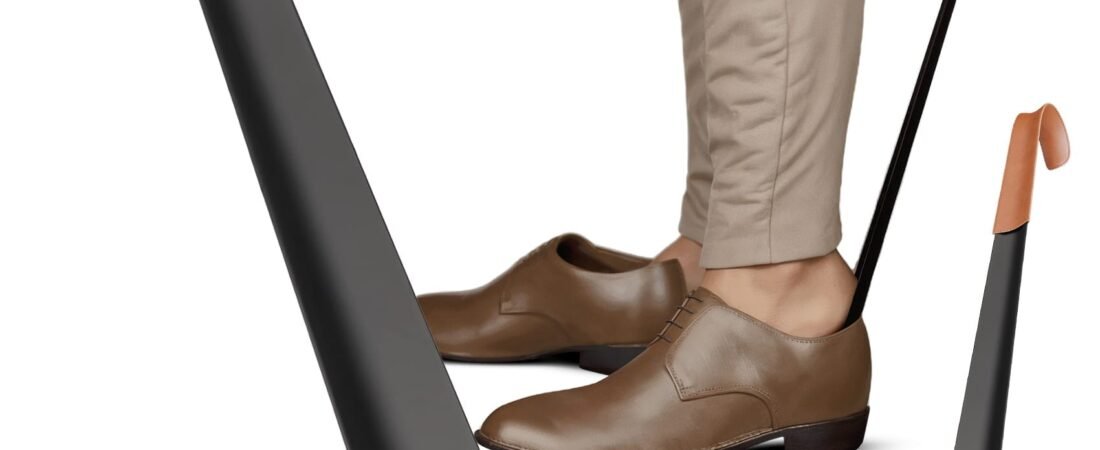
If the backs of your shoes keep becoming crushed, folded or worn down when you put them on, the problem may not be the shoes themselves. The way you put your footwear on can place unnecessary pressure on the heel area.
This is particularly common when someone pushes their foot into a shoe without loosening it properly or repeatedly steps on the heel to get their foot inside.
The good news is that small changes can help. Loosening fastenings, using a shoe horn and choosing footwear with an appropriate fit can all make putting shoes on easier while helping protect the heel structure.
Why Does the Back of My Shoe Get Damaged?
The heel section of a shoe is often designed to help hold the foot in position. Depending on the footwear, it may contain padding, a structured heel counter or other materials that can become distorted when repeatedly crushed.
Common causes include:
- Forcing your foot into a narrow opening
- Not loosening laces enough
- Stepping on the heel
- Using your fingers to push against the back
- Wearing shoes that are difficult to put on
- Pulling aggressively on the heel
- Putting shoes on without a shoe horn
Repeated pressure can eventually leave the heel looking collapsed, creased or misshapen.
1. You Are Not Loosening the Shoe Enough
One of the most common mistakes is trying to slide your foot into a tightly fastened shoe.
For lace-up footwear, loosen the laces sufficiently before putting your foot in. With trainers, boots and formal shoes, make sure the opening is wide enough for your foot to enter without excessive force.
Once your foot is positioned correctly, fasten the shoe again.
This simple habit can reduce unnecessary stress on the heel.
2. You Are Stepping on the Heel
Stepping on the back of a shoe to force your foot inside is convenient, but it can deform the heel over time.
The problem becomes particularly noticeable with structured shoes that are designed to maintain a specific shape around the heel.
Instead of standing on the heel, sit down and put the shoe on properly. If reaching your heel is difficult, a shoe horn can provide a much easier solution.
3. You Need a Shoe Horn
A shoe horn is specifically designed to help the heel slide into footwear.
Place the shoe horn between your heel and the back of the shoe, then gently guide your foot into position. You should not need to force your foot down aggressively.
A long-handled shoe horn can be especially convenient if bending down is difficult.
For regular use, a shoe horn can be a simple way to reduce unnecessary pressure on the heel of your footwear.
How to Use a Shoe Horn Without Damaging Shoes
Using a shoe horn incorrectly can still cause problems.
Follow these steps:
- Loosen the footwear.
- Place your toes into the front of the shoe.
- Position the shoe horn behind your heel.
- Keep the shoe horn aligned with the back of the shoe.
- Gently slide your foot forward.
- Remove the shoe horn once your heel is seated.
- Fasten the footwear securely.
Do not use the shoe horn to force your foot into footwear that is too small.
4. Your Shoes May Be Too Tight
If you consistently struggle to get your feet into your shoes, consider the fit.
Footwear that is too narrow or has an opening that is difficult to access may encourage you to push, pull and bend the heel unnecessarily.
A shoe horn can make the process easier, but it cannot compensate for footwear that does not fit properly.
If your shoes are consistently difficult to put on, consider whether a different size, fastening system or style would be more suitable.
5. Pulling Hard on the Heel Can Cause Wear
Some people grab the back of a shoe and pull forcefully while pushing their foot forward.
Although this may help in the short term, repeated pulling can put unnecessary stress on the heel materials, stitching or attachment points.
Use a shoe horn instead where practical, particularly with structured footwear.
What Type of Shoe Horn Should You Use?
The best shoe horn depends on your footwear and how you use it.
Short shoe horns
A compact shoe horn can be useful for:
- Travel
- Office storage
- Small spaces
- Everyday footwear
- Keeping in a drawer or bag
Long shoe horns
A long-handled model may be preferable if you want additional reach or do not want to bend down as far.
Metal or plastic?
Metal shoe horns can provide substantial rigidity and are often suited to frequent use. Plastic models can be lightweight and convenient, particularly for travel.
The material is not the only consideration. Look for a smooth, appropriately shaped shoe horn that is comfortable to handle.
Can Insoles Cause Shoes to Get Damaged?
Insoles and shoe inserts do not normally cause heel damage simply because they are inside the shoe. However, adding an insert changes the amount of space available inside the footwear.
If an insert makes the shoe excessively tight, putting the shoe on may become more difficult.
For example, TYGA HEIGHT INCREASE INSOLES, TYGA HEIGHT BOOSTERS and TYGA SHOE INSERTS are designed for use inside suitable footwear. When using any in-shoe insert, make sure your shoes have enough internal room and remain comfortable.
If your footwear becomes noticeably harder to put on after adding an insert, reassess the fit rather than forcing your foot inside.
How to Stop Your Shoes Getting Damaged
A few simple habits can make a significant difference:
Always loosen the footwear
Do not try to force your foot through a narrow opening.
Use a shoe horn
This is particularly useful for formal shoes, boots and other structured footwear.
Never stand on the heel
Keep the heel supported properly when putting the shoe on.
Avoid excessive force
If your foot will not enter easily, stop and check the fit.
Store shoes properly
Avoid crushing or stacking footwear in ways that deform the heel.
Check your footwear regularly
If the heel is already badly collapsed, continuing to force your foot into it may make the problem worse.
When Should You Replace Damaged Shoes?
Minor creasing is normal in many types of footwear, but severely deformed or damaged shoes may no longer provide the fit or support intended by their design.
Consider replacing footwear if you notice substantial structural damage, exposed components, broken fastenings or deterioration that affects comfort or safe use.
A shoe horn can help prevent avoidable wear, but it cannot restore a heel that has already been permanently damaged.
Your Questions Answered
Why does the back of my shoe collapse?
The heel can collapse when it is repeatedly stepped on, pushed down or forced around while putting the shoe on. Repeated pressure can deform the structure.
Does a shoe horn prevent shoe damage?
A shoe horn can reduce unnecessary pressure on the heel when putting footwear on, particularly when used with properly loosened shoes.
Is it bad to step on the back of your shoes?
Repeatedly stepping on the heel can deform the back of footwear and may reduce its intended shape. It is better to put the shoe on properly.
Can tight shoes damage the heel?
Shoes that are difficult to enter may encourage excessive pushing and pulling, which can contribute to wear around the heel. Correct fit is important.
Are long shoe horns better?
Not necessarily. A long shoe horn is useful when additional reach is desirable, while a short model can be easier to store and carry.
Final Words
If your shoes keep getting damaged when putting them on, start by changing how you enter them. Loosen the footwear properly, avoid stepping on the heel and use a shoe horn when appropriate.
If the problem continues, check whether the shoes are too tight or whether an in-shoe accessory is reducing the available space.
A little extra care when putting your footwear on can help preserve the shape of the heel and keep your shoes looking and functioning better for longer. If you regularly struggle with putting shoes on, choosing a suitable shoe horn is one of the simplest practical solutions.