Some trees are more than wood and leaves. They are living landmarks — witnesses to centuries of ecological and human history. Ohio’s champion trees represent the largest known specimens of their species in the state, and Delaware County, including the Lewis Center area, sits within a region of Ohio with notable native tree diversity and active conservation interest.
This guide explains what Ohio champion trees in Delaware County and Lewis Center are, how the Ohio champion tree program works, how trees are measured and nominated, and what residents can do to support tree preservation in their community.
What Are Ohio Champion Trees?
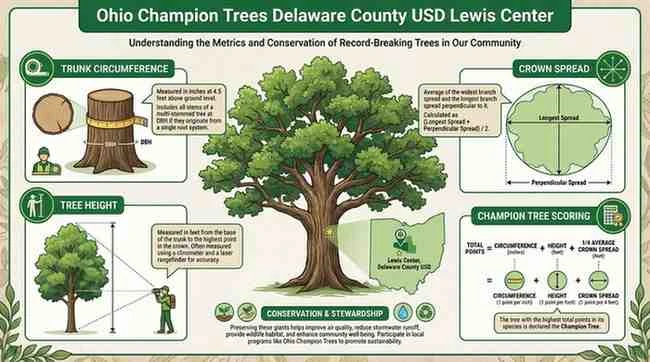
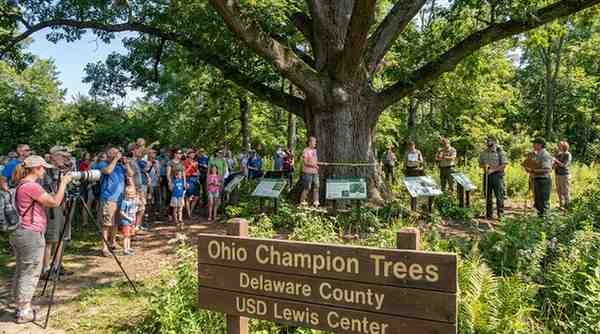
Ohio champion trees are the largest recorded specimens of a given tree species in the state, recognized through an official registry program. A tree earns champion status by outscoring all other known specimens of its species using a standardized point system based on trunk circumference, height, and crown spread.
Champion tree designation matters beyond bragging rights. These trees represent genetic reservoirs of mature native species, often supporting biodiversity that younger trees cannot replicate. Large, old trees provide habitat for cavity-nesting birds, mammals, and insects; sequester significantly more carbon than younger trees; and anchor forest ecosystems through their root systems and canopy contributions.
Ohio’s champion trees range from familiar species like white oak, sycamore, and tulip poplar to rarer natives such as pawpaw, yellowwood, and Kentucky coffeetree — each representing decades or centuries of undisturbed growth.
What Is the Ohio Champion Tree Program?
The Ohio Champion Tree Program is administered through the Ohio Department of Natural Resources (Ohio DNR) Division of Forestry. The program maintains a statewide registry of the largest known specimens of Ohio’s native and naturalized tree species, updated as new nominations are submitted and verified.
The program serves several conservation goals:
- Identifying and documenting exceptional tree specimens before they are lost to development, disease, or storm damage
- Creating a living inventory of Ohio’s most significant trees for forestry research and conservation planning
- Engaging the public in environmental stewardship through citizen-led nominations
- Recognizing landowners who preserve exceptional trees on their property
How Does the Champion Tree Registry Work?
Any Ohio resident can nominate a tree for champion status. Once a nomination is submitted with measurements and documentation, Ohio DNR forestry staff review and verify the data. If the nominated tree outscores the current state champion for that species, it is designated the new champion and added to the official registry.
The registry is a living document — records change as new specimens are discovered or existing champions are lost. This dynamic nature makes public participation essential to keeping the program accurate and comprehensive.
Who Maintains Champion Tree Records?
The Ohio DNR Division of Forestry maintains official champion tree records. County-level extension offices, local conservancy districts, and organizations such as the Ohio Forestry Association support outreach and nomination assistance. Landowners, naturalists, arborists, and forestry professionals all contribute nominations, making the program a genuine public-private collaboration.
Are There Champion Trees in Delaware County and Lewis Center?
Delaware County occupies a transitional zone between Ohio’s central plains and the more heavily forested eastern and southeastern regions of the state. This position supports a diverse native tree assemblage, including species that reach exceptional sizes given the county’s soil types and land use history.
While specific current champion tree records for Delaware County change as nominations are updated, the county’s mature woodlots, stream corridors along the Olentangy River and its tributaries, and preserved natural areas provide habitat where large native specimens can develop. Lewis Center, as an unincorporated community in Orange Township, sits within this landscape.
Why Is Delaware County Important for Tree Conservation?
Delaware County is one of Ohio’s fastest-growing counties, with significant residential and commercial development pressure on previously forested and agricultural land. This growth context makes tree conservation particularly urgent. Large trees lost to development cannot be quickly replaced — a 200-year-old white oak cannot be substituted by a sapling within any planning horizon meaningful to current residents.
The county’s proximity to Columbus also makes its natural areas and tree canopy valuable for urban forestry purposes — moderating heat island effects, managing stormwater, and providing greenspace for a rapidly expanding population.
What Native Trees Thrive Near Lewis Center?
The Lewis Center area and broader Delaware County support a range of native tree species capable of reaching impressive sizes:
- Sycamore (Platanus occidentalis) — Ohio’s largest native tree by trunk diameter, thriving along stream corridors
- Tulip poplar (Liriodendron tulipifera) — one of Ohio’s tallest native species, found in moist woodland settings
- White oak (Quercus alba) — long-lived and capable of extraordinary trunk circumferences in undisturbed sites
- Bur oak (Quercus macrocarpa) — fire-resistant and exceptionally long-lived, with significant historical presence in central Ohio
- Black walnut (Juglans nigra) — commonly reaching large sizes in Delaware County’s agricultural and riparian settings
- Shagbark hickory (Carya ovata) — native to central Ohio with notable specimen sizes in older woodlots
Residents who own wooded property or access natural areas near Lewis Center may have champion-caliber trees without knowing it.
How Are Champion Trees Measured in Ohio?
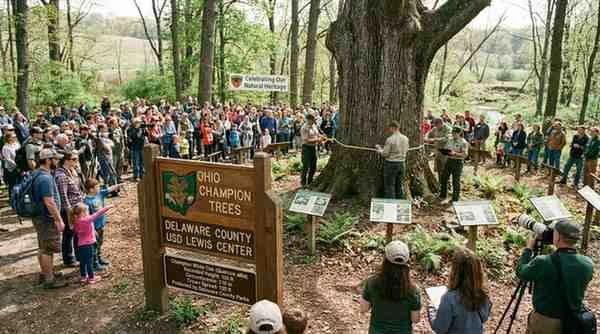
Champion trees in Ohio are scored using the American Forests national champion tree measurement methodology, which Ohio DNR follows. The system produces a point total from three measurements.
| Measurement Factor | Description |
|---|---|
| Circumference | Trunk circumference in inches, measured at 4.5 feet above ground (standard diameter breast height). One inch of circumference equals one point. |
| Height | Total tree height in feet, measured using a clinometer or laser rangefinder. One foot of height equals one point. |
| Crown Spread | Average crown spread in feet — the average of the widest spread and the spread perpendicular to it. One-quarter of the crown spread measurement equals points. |
| Total Points | Circumference points + Height points + Crown spread points = Champion score |
A tree with a 180-inch circumference, 90-foot height, and 80-foot average crown spread would score 180 + 90 + 20 = 290 points. The tree with the highest point total for its species holds state champion status.
Accurate measurement requires basic forestry tools — a measuring tape, clinometer or laser height meter, and a GPS device for location recording. Many local arborists and extension offices can assist nominators with proper technique.
Why Are Champion Trees Important for Conservation?
Champion trees provide ecological, environmental, educational, and community value that extends well beyond their impressive size.
Biodiversity: Large, mature trees support dramatically greater biodiversity than younger specimens. A single large oak may support hundreds of insect species, many of which are food sources for birds and other wildlife. Removing mature trees collapses these food webs in ways that take generations to rebuild.
Carbon storage: Large trees store disproportionately more carbon than small ones. A champion-sized tree may store as much carbon as hundreds of saplings.
Genetic preservation: Champion trees represent proven genetic stock — specimens that have survived drought, disease, storm, and competition for decades or centuries. Their seeds and propagated stock carry valuable adaptive traits for native tree species restoration.
Hydrology: Deep-rooted mature trees intercept rainfall, reduce runoff, and recharge groundwater in ways that younger trees cannot replicate for decades.
Cultural and historical value: Many champion trees predate European settlement or witnessed significant historical events. They are irreplaceable connections to Ohio’s natural and human heritage.
Where Can You Find the Ohio Champion Tree Map?
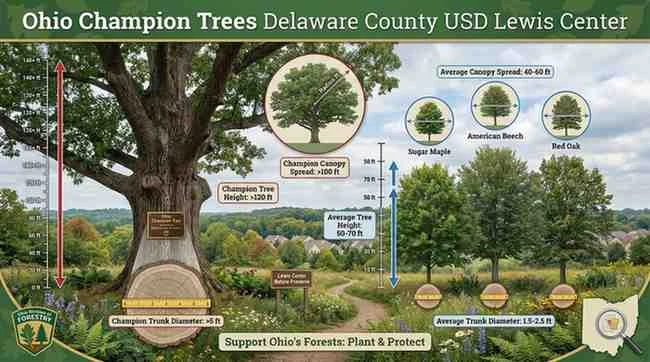
The Ohio DNR Division of Forestry publishes champion tree records through its official website at ohiodnr.gov. The current champion tree list is maintained as a searchable database organized by species, with location information for publicly accessible trees.
Additional resources for locating notable trees include:
- Ohio Woodland Stewards Program resources through OSU Extension
- American Forests National Champion Tree database at americanforests.org, which lists national champions including Ohio specimens
- iNaturalist and similar citizen science platforms where notable tree observations are mapped
- Delaware County Soil and Water Conservation District for local conservation resource referrals
- Ohio Forestry Association for professional forestry contacts who can assist with identification and nomination
For Lewis Center and Delaware County specifically, contacting the Delaware County OSU Extension office or the local conservancy district is the most direct route to region-specific information on notable trees and current local programs.
How Can You Nominate a Champion Tree in Ohio?
Nominating a champion tree is a straightforward process open to any Ohio resident. Follow these steps:
- Identify a candidate tree. Look for unusually large specimens of a native or naturalized Ohio tree species on property you own or have access to with the landowner’s permission.
- Measure the tree accurately. Record trunk circumference at 4.5 feet above ground, total height using a clinometer or laser tool, and average crown spread. Use the point formula to calculate a preliminary score.
- Document the tree. Photograph the full tree, the trunk base, and notable features. Record the GPS coordinates and the specific location address or legal description.
- Complete the nomination form. Download the Ohio DNR champion tree nomination form from ohiodnr.gov and fill in all required fields including species identification, measurements, and location.
- Submit to Ohio DNR. Send the completed form and documentation to the Ohio DNR Division of Forestry. Contact information is available on the DNR website.
- Verification. DNR staff or a designated forester will review and, for significant nominations, conduct a field verification visit to confirm measurements and species identification before awarding champion status.
What Are the Benefits of Preserving Champion Trees?
| Benefit | Impact |
|---|---|
| Environmental | Carbon sequestration, air quality improvement, stormwater management, soil stabilization |
| Educational | Living laboratories for botany, ecology, and forestry education; citizen science engagement |
| Historical | Irreplaceable connections to Ohio’s pre-settlement and early settlement landscape |
| Ecological | Critical habitat for birds, mammals, and insects; biodiversity anchors in fragmented landscapes |
| Community | Greenspace quality, property value enhancement, cultural identity, and civic pride |
What Are Some Interesting Facts About Ohio Champion Trees?
| Topic | Key Insight |
|---|---|
| Largest Trees | Ohio’s largest trees by trunk diameter are typically sycamores growing along river corridors; some exceed 20 feet in circumference |
| Native Species | Ohio recognizes champions for over 100 native and naturalized tree species, from common oaks to rare pawpaw and yellowwood |
| Conservation | Champion trees often anchor conservation area designations, making their recognition a practical tool for protecting surrounding habitat |
| Forestry Records | Champion records change regularly — dozens of nominations are processed annually as citizens find new specimens |
| Heritage Value | Some Ohio champion trees predate statehood (1803), meaning they have stood for well over 200 years |
FAQs About Ohio Champion Trees Delaware County USD Lewis Center
What are Ohio champion trees?
The largest known specimens of a given tree species in Ohio, designated through the Ohio DNR champion tree program using a standardized point scoring system.
Where can I find champion trees in Delaware County?
Notable specimens are most likely in older woodlots, along the Olentangy River corridor, and in preserved natural areas. Contact Delaware County OSU Extension or the Ohio DNR for current local records.
Are there champion trees near Lewis Center Ohio?
Lewis Center’s surrounding landscape supports species capable of champion-caliber sizes, particularly sycamore, white oak, and tulip poplar. No publicly announced current champion is attributed specifically to Lewis Center in available records, but nominations from the area are possible and encouraged.
How are champion trees measured?
Using trunk circumference at 4.5 feet above ground, total height in feet, and average crown spread in feet — combined into a point total using the American Forests formula.
What qualifies a tree as a champion tree?
A tree must achieve the highest point total among all known specimens of its species in Ohio to hold state champion designation.
How can I nominate a champion tree?
Measure the tree, document it with photos and GPS coordinates, complete the Ohio DNR nomination form, and submit it to the Division of Forestry for review and verification.
Why are champion trees important?
They preserve biodiversity, store significant carbon, protect genetic heritage of native species, and serve as ecological anchors in both rural and urban landscapes.
Where can I view the Ohio champion tree map?
Through the Ohio DNR Division of Forestry at ohiodnr.gov and through the American Forests national champion tree database at americanforests.org.
What are native champion trees?
Champion trees of species native to Ohio — such as white oak, sycamore, tulip poplar, and shagbark hickory — as opposed to naturalized non-native species also tracked by the program.
Does Ohio DNR maintain champion tree records?
Yes. The Ohio DNR Division of Forestry is the official keeper of the Ohio champion tree registry, updated continuously as new nominations are submitted and verified.
What Can Residents of Lewis Center Do to Support Tree Conservation?
Local action matters significantly in a fast-growing area like Lewis Center and Delaware County. Residents can contribute to tree conservation in practical ways:
- Plant native species in yards and community spaces — prioritize oaks, hickories, and other long-lived natives with high ecological value over ornamental non-natives
- Preserve existing mature trees during landscaping and construction projects; consult a certified arborist before removing any large tree
- Report significant trees to Ohio DNR or the local OSU Extension office if you discover an unusually large specimen on accessible property
- Participate in community forestry programs through Delaware County Soil and Water Conservation District and local township tree-planting initiatives
- Advocate for tree preservation ordinances at the township and county level, particularly as development pressure increases
- Educate neighbors about the ecological and economic value of mature trees — community awareness is the foundation of effective local conservation
Final Thoughts on Ohio Champion Trees Delaware County USD Lewis Center
Ohio’s champion trees are irreplaceable natural landmarks, and the Delaware County and Lewis Center region contains landscapes where these remarkable specimens can still be found and protected. Understanding how the Ohio champion tree program works — from measurement methodology to the nomination process — empowers every resident to participate in identifying and preserving the state’s most significant trees.
As Delaware County continues to grow, the trees that stand today in its woodlots, riparian corridors, and natural areas become increasingly important to conserve. A champion-sized white oak or sycamore near Lewis Center is not simply a large tree — it is a centuries-old ecological asset, a carbon store, a wildlife habitat, and a piece of Ohio’s natural heritage.
Explore your local natural areas with fresh eyes. You may be standing near a champion tree without knowing it. If you find one, nominate it — and help ensure it receives the recognition and protection it deserves.
Know of a remarkable tree near Lewis Center or Delaware County? Share this guide with your neighbors, leave a comment below, or contact Ohio DNR to start a nomination. Every champion tree recorded is one more reason to preserve what remains.